
ICCS is well known for its lineup of keynote speakers. Please check back regularly for new names and lecture details.
Piotr FaliszewskiAGH University of Kraków
Poland
Philipp Neumann
DESY | University of Hamburg
Germany
Hector Zenil
King’s College London | Algocyte
UK
The Complexity Metrics Landscape: How Many Measures and Where Are we Going? A Causal Approach and Applications Beyond the Shannon Barrier
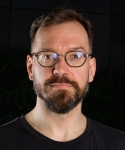
TBA
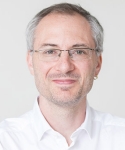
DESY | University of Hamburg, Germany
WEB
Philipp Neumann holds a professorship on HPC and data science at University of Hamburg (UHH) and he is the first Lead Scientist at Deutsches Elektronen-Synchrotron (DESY) in the field of computer science. His research focuses on HPC- and data science aware, cross-disciplinary research for matter applications, in particular on molecular and multiscale simulation technology in fluid dynamics. He further heads the DESY IT group, which is, amongst others, responsible for extreme-scale data ingest in the photon science facilities and the Worldwide LHC Computing Grid site at DESY. Within the Helmholtz association, Philipp is the spokesperson of the Helmholtz Federated IT Services. Before his appointment with UHH/DESY, Philipp held a professorship at Helmut-Schmidt-Universität Hamburg, where he established a HPC competence platform including HPC facilities, and postdoc/senior researcher positions at UHH, the German Climate Computing Center and the Technical University of Munich, from which he also holds a PhD.
TBA
A Causal Approach and Applications Beyond the Shannon Barrier
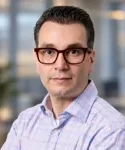
King’s College London | Algocyte, UK
WEB 1 | WEB 2
Dr Hector Zenil, FRSM is an Associate Professor at King’s College London and Founder and CEO of Algocyte. A leading researcher who introduced the concept of algorithmic information dynamics, he develops computational approaches to understanding complexity, causality and emergence, with applications spanning science, Super intelligence, and biomedical engineering. His work connects foundational ideas in algorithmic information theory with practical challenges in cell and molecular biology, and intelligent systems.
He holds postgratudate studies from Oxford and the Sorbonne (Paris 1/ENS) and two PhDs, earned (Sorbonne Paris 1/ENS and Lille). His academic career has taken him through Oxford, Cambridge, and the Karolinska Institutet in Sweden, and through visiting positions at MIT, Carnegie Mellon, NUS and KAUST, alongside more than a decade with Wolfram Research leading Stephen Wolfram’s first journal in the field Complex Systems and contributing to WolframAlpha, technology that has powered Siri, Alexa and ChatGPT in the past. He has published over 140 peer-reviewed papers and chapters and multiple edited and authored books published by Cambridge University Press, Springer Nature and World Scientific Publishing Company/Imperial College Press.
Complexity metrics abound, yet the growing number of metrics has not made us richer but potentially poorer in the understanding of the field with redundancies and gaps as to how these metrics relate to each other. This talk will address some aspects of the current landscape, distinguishing measures by the properties they capture, and the assumptions they make. It asks whether these metrics can be organised within a common computability and statistical framework, and what criteria should guide their selection and development.
I will argue that causal analysis offers a way to move beyond describing patterns and correlations to assess the information and structure that are causally relevant to its dynamics. I will introduce Algorithmic Information Dynamics and connect disparate metrics ranging from statistical measures to algorithmic information theoretic ones to exploit the best of all worlds in an attempt to find synergy rather than divergence, while clarifying strengths and limitations of each.
I will also consider applications beyond the usual Shannon-theoretic barrier, where questions of structure, computation and causal organisation may call for measures not reducible to entropy or predictive performance alone. Examples from science and artificial intelligence will illustrate how a causal approach can be applied to areas such as cell and molecular biology, healthcare, the immune system,m and medicine.